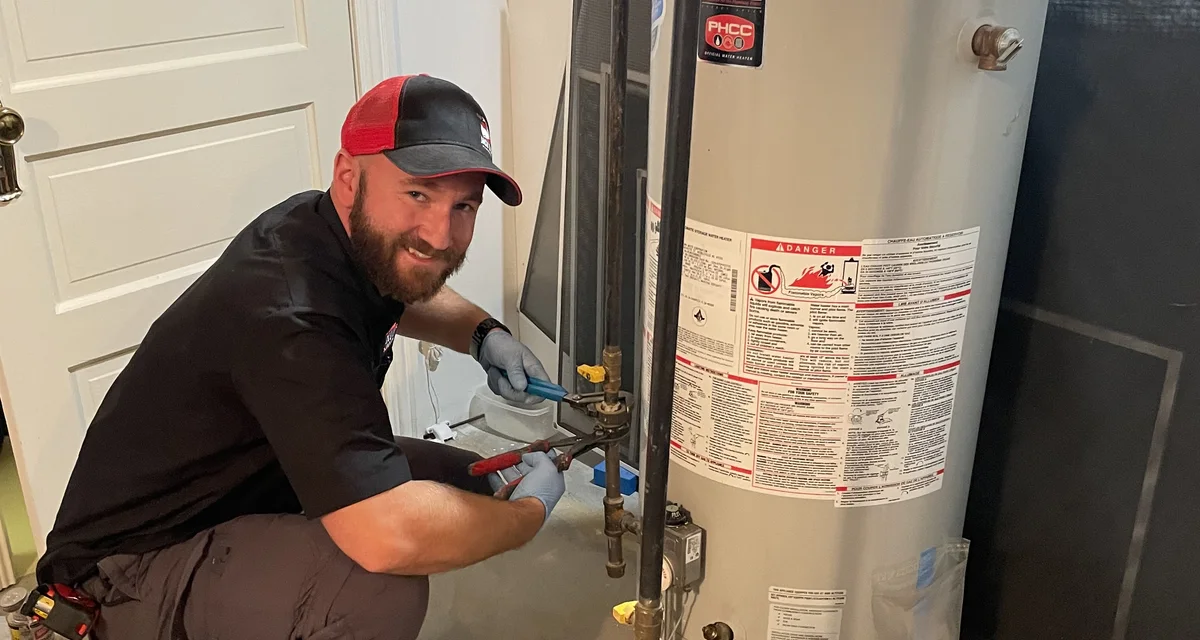
By Jackson MacDonald, owner of Jack’d Up Plumbing
Smell gas? Natural gas has a rotten-egg smell added so a leak can be noticed. If you smell it, leave right away. Leave the tank, the lights and every other appliance alone, and call 911 or ATCO’s emergency line once you’re outside.
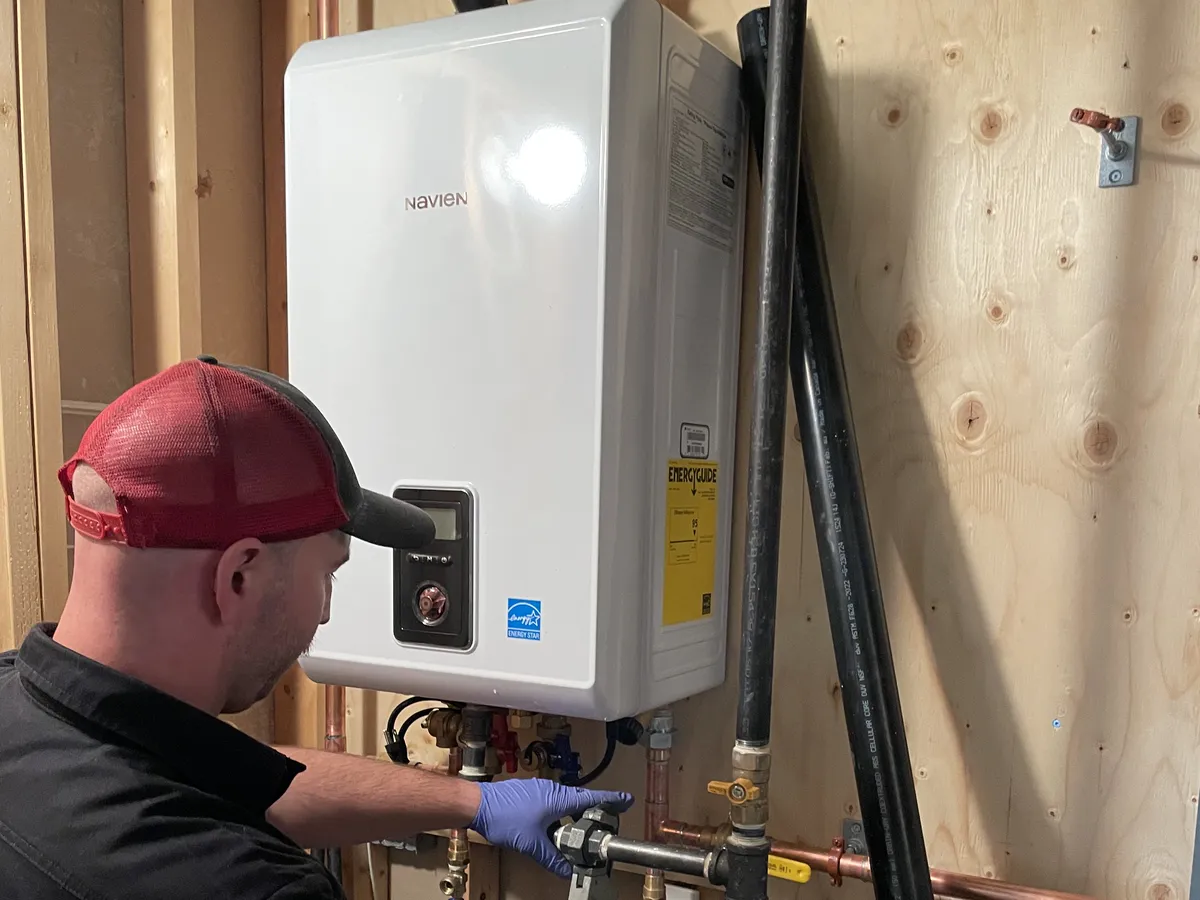
A hot water tank leak needs two things done right away: turn the tank off, and shut off the water going into it. Switch off its breaker if it’s electric, or turn the gas control knob to OFF if it’s gas. Then close the shut-off valve on the cold water pipe that feeds the tank, and find where the water is coming from.
What to Do First When Your Hot Water Tank Is Leaking
Maybe you came downstairs and found your mechanical room full of water. Maybe it’s a puddle beside the tank that wasn’t there yesterday. Either way, take these steps in order.
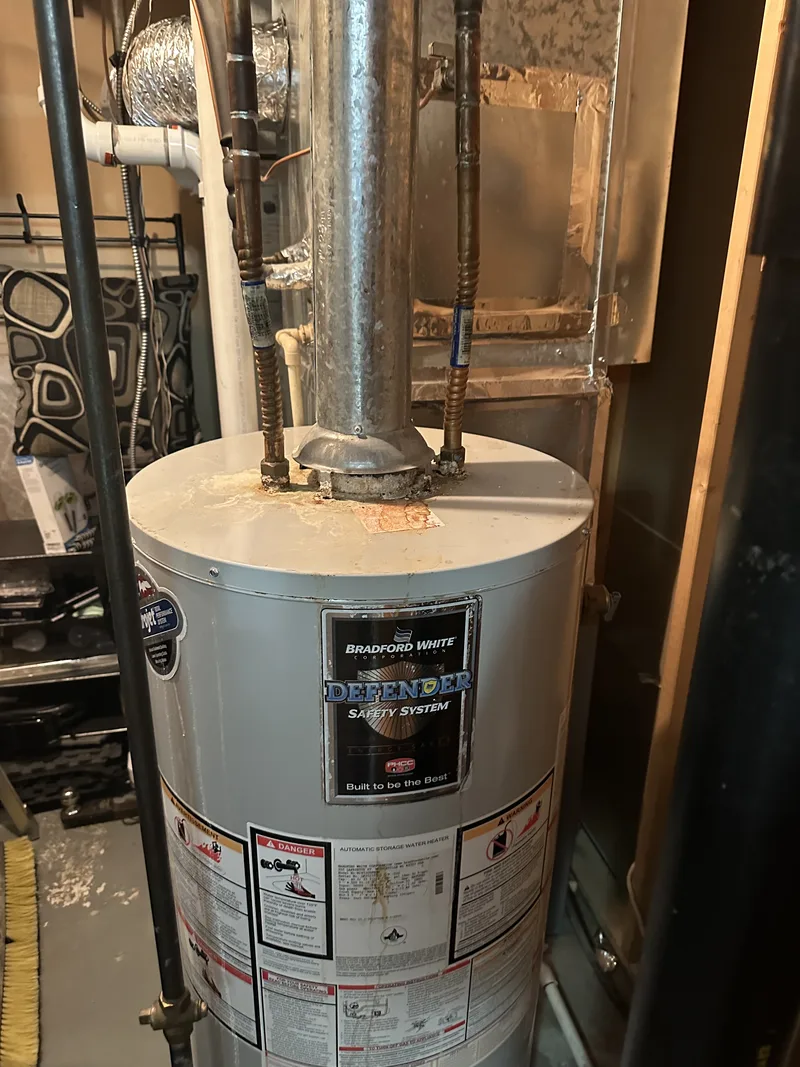
- Smell gas? Leave first. Leave right away, and leave the lights and appliances alone. Once you’re outside, call 911 or the emergency line on ATCO’s gas emergency page.
- Turn the tank off. On an electric tank, switch off its breaker. On a gas tank, push the gas control knob in slightly and turn it clockwise to OFF.
- Close the cold water valve. It’s the shut-off valve on the cold water pipe that feeds the tank. If it won’t turn, or the water doesn’t stop, close your home’s main water shut-off, usually where the water line comes into the house.
- If the tank has been sitting in water. Don’t use a water heater, gas or electric, if any part of it has been under water. If it’s a gas tank, also close its gas supply shut-off valve, and don’t run it again until a qualified service technician has inspected it.
- Limit the damage. Put down towels or a bucket, and move stored things off the wet floor. Keep your hands out of water coming from the tank: hot water from a tank can cause third-degree burns, as a manufacturer’s gas water heater manual warns.
- Call a licensed plumber. Don’t keep using a leaking tank, and never try a repair while it still has power and water connected. Treat it as urgent: even a small leak can do real water damage, lead to mould and get worse over time. Take a photo of where the water is, and of the tank’s rating label, to show the journeyman when they arrive.
Is It a Leak, or Condensation?
Not every drop on a tank means your water heater is leaking. Condensation on a tank is common, and a manufacturer’s electric water heater manual is clear that it must never be mistaken for a leaking tank. It forms when a tank is first filled with cold water, and when a lot of hot water is used quickly and the refill water is very cold. On a gas tank it can also appear when cold water comes in, or when the burner fires after the tank has sat for a while. Either way, it goes away once the water is hot.
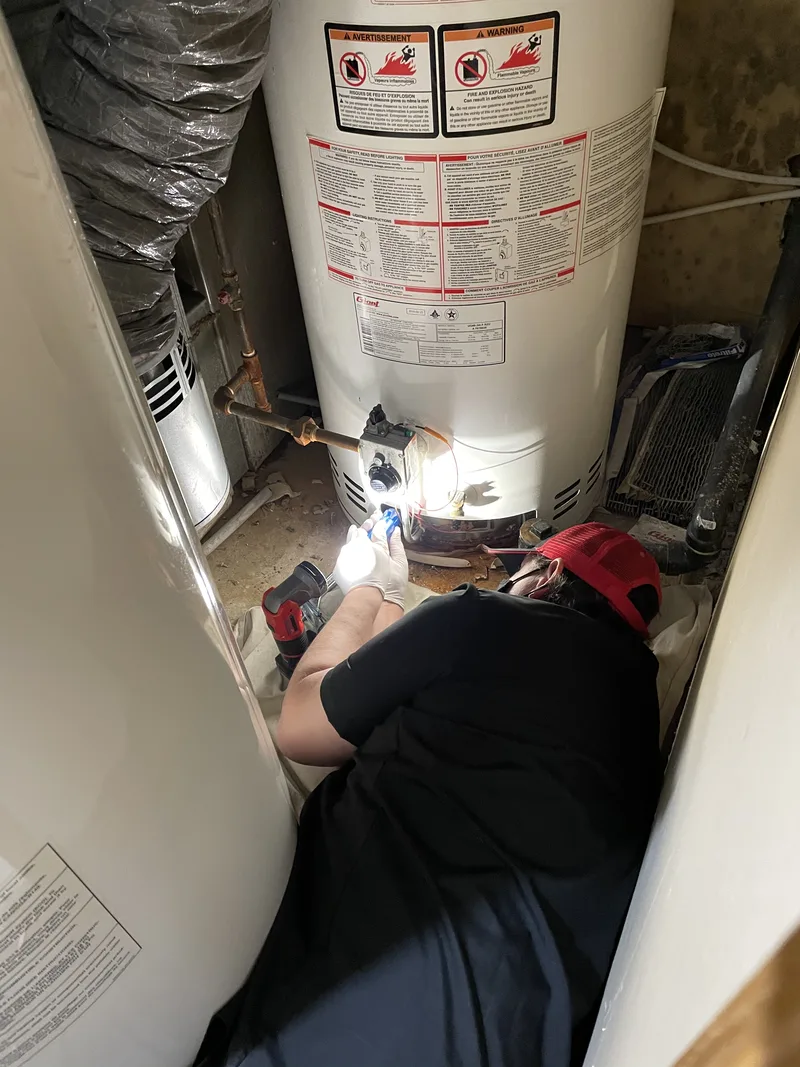
If water keeps dripping after the tank has heated up, it isn’t condensation. It’s a leak, and the plumbing connections are the first place to look.
- Gone once the tank is hot: condensation.
- Still dripping once the water is hot: a leak.
- Near the tank but not on it: something else in the room. Check a humidifier, a water softener’s drain line, a backed-up floor drain, and the condensate line on a high-efficiency furnace: the small pipe that drains the water the furnace makes.
If the water is coming from a pipe rather than the tank, that’s a job for leak repair, not the water heater.
Where Is Your Hot Water Tank Leaking From?
Where the water shows up tells you what is most likely wrong. Here is how the manufacturers read each spot; A. O. Smith’s leak guide walks through the same ones.
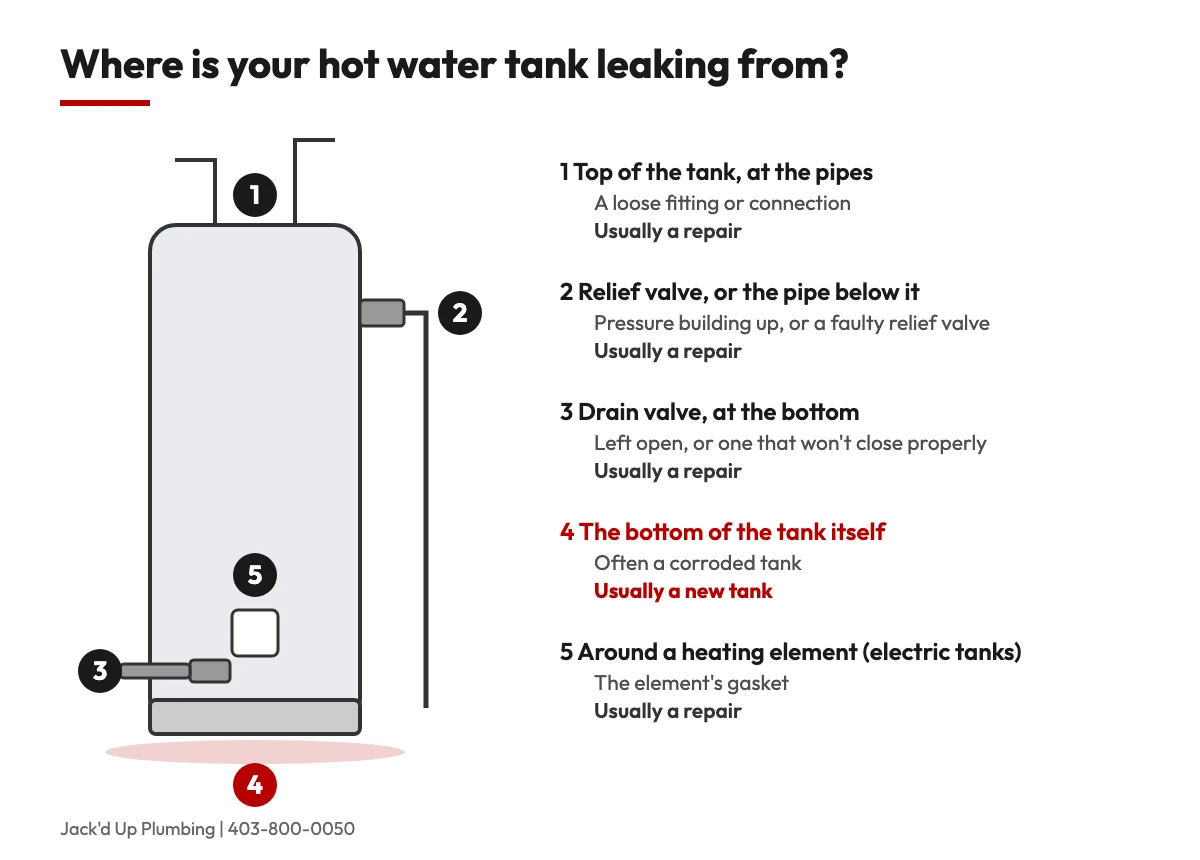
| Where the water is | What it usually means | Usually a repair, or a new tank |
|---|---|---|
| Top of the tank, at the pipes | A loose fitting or connection | Repair |
| Down the side, from the relief valve or its pipe | Pressure building up, or a faulty relief valve | Repair |
| Bottom, at the drain valve | A drain valve left open, or one that won’t close properly | Repair |
| Bottom, from the tank itself | Often a corroded tank | New tank |
| Around a heating element (electric tanks) | The element’s gasket | Repair |
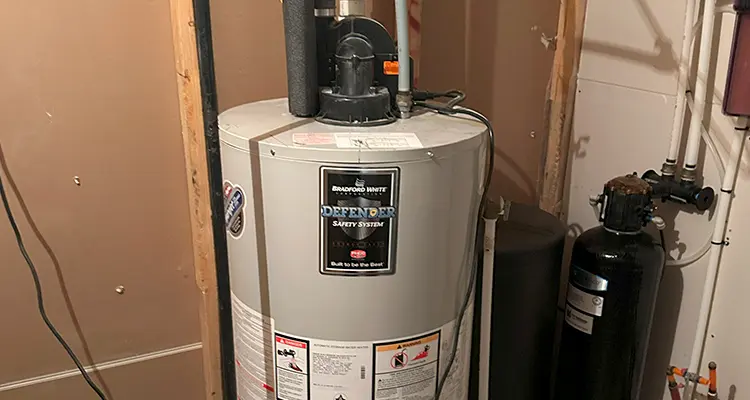
At the top of the tank. Water here points to the pipe fittings and connections. They can work loose over time as the tank heats and cools, and from ordinary wear. Sometimes tightening them takes care of the problem.
Down the side, from the relief valve. Water down the side often comes from the temperature and pressure relief valve: a safety valve that lets water out when pressure builds up. Frequent water dripping from the relief valve, or from the pipe below it, is a sign of pressure building up in the system. A relief valve that runs constantly may itself be faulty, and a qualified technician must check the system.
One common cause is water pressure that is too high. The fix is a pressure reducing valve: a valve on the main water line that brings the incoming pressure down.
Another is thermal expansion in a closed water system. When a water heater runs, the heated water expands and builds up pressure. In a closed system, a one-way valve or a pressure reducing valve on the cold water line stops that water from expanding back toward the main. The fix is an expansion tank on the cold water line: a small tank that gives the expanding water somewhere to go.
Never plug or cap the relief valve or its pipe.
At the bottom, from the drain valve. A hot water tank leak from the drain valve is one of two things. A drain valve that has been left open just needs closing. One that won’t close properly is usually replaced.
At the bottom, from the tank itself. A hot water tank leaking from the bottom, with the drain valve dry, is the one to take most seriously. Water at the base is often the first sign of a serious problem, such as a corroded tank. Corrosion from hard water can’t be repaired, and when the tank itself leaks, the remedy is a new water heater.
Around a heating element. On an electric tank, water around a heating element points to the element’s gasket.
Repair or Replace? What the Leak Tells You
How to fix a hot water tank leak depends on where it is. A leak at a part is a repair: a fitting, the relief valve, the drain valve or an element gasket. So is a pressure problem, solved with a pressure reducing valve or an expansion tank. A leak from the tank body is not: a leaking tank needs a new water heater.
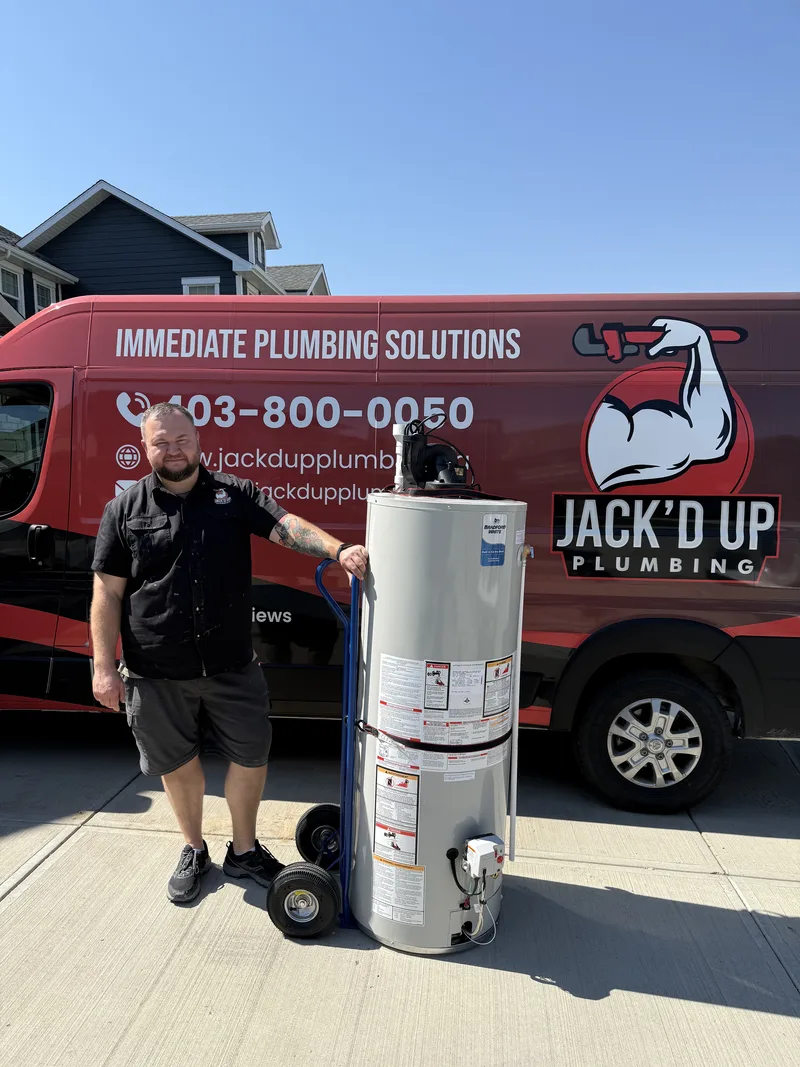
So, can a leaking water heater be fixed? Often, yes, unless it’s the tank itself. Our water heater repair visit starts with finding out which it is.
Age matters too. A. O. Smith’s repair-or-replace guide puts the average life of a water heater at about 8 to 12 years, based on the manufacturer’s suggested service life. The same guide says a tank more than 10 years old that leaks around its base is probably due for replacement. When a leaking hot water tank is past saving, Natural Resources Canada’s advice is to always hire a licensed professional to install the new one. If it’s time for replacing your hot water tank, a licensed Red Seal journeyman does the work.
In Calgary, installing or replacing a hot water tank needs a City permit in some situations. A permit is needed for a change to the gas line upstream of the water heater’s shut-off valve, to the venting, or to the type of water heater. Under the same City rules, a homeowner can’t take out a gas permit unless they are a certified journeyman gasfitter (first or second class); otherwise a licensed contractor pulls it.
You don’t have to decide alone. A licensed journeyman looks at the tank and gives you your options, repair or replace, with a firm price agreed before any work starts.
Why Hot Water Tanks Leak in Calgary, and How to Slow It Down
Every water heater leaks sooner or later. In Calgary, the water itself plays a part. The City of Calgary says the water is hard because of the calcium and magnesium in the Bow and Elbow Rivers.
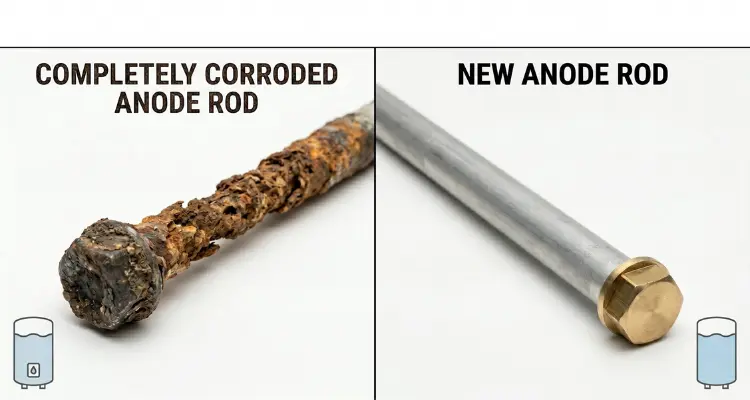
Hard water minerals build up over time and cause corrosion and leaks. Minerals that settle at the bottom of the tank can cause overheating, cracks and leaks. Water pressure that is too high puts stress on the tank and its connections. Inside the tank, the anode rod corrodes on purpose, so that the tank itself doesn’t rust.
What slows it down is regular flushing, which keeps sediment from building up. One manufacturer’s owner’s manual sets it at a pail of water drained through the drain valve at least once a year. A tank flush is part of water heater maintenance, if you’d rather have it done for you.
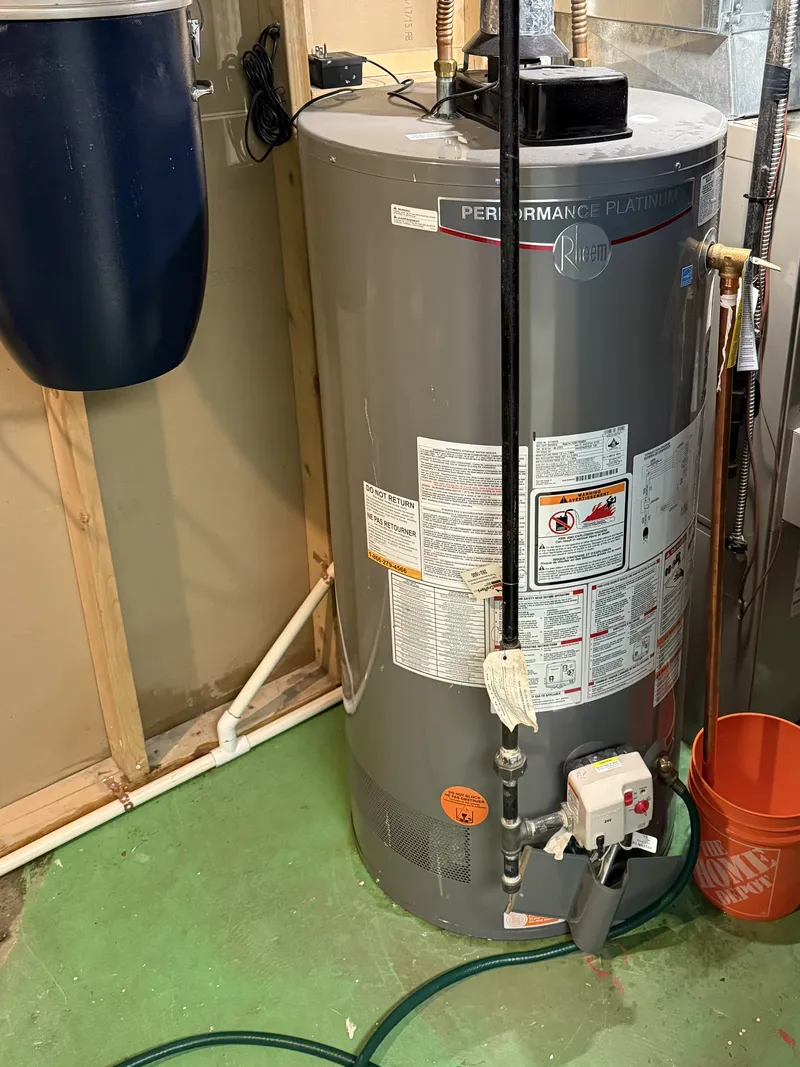
Who to Call When Your Tank Is Leaking in Calgary
Something broke today, and you want it handled by someone you can rely on. If you’re wondering who to call when a water heater is leaking, call Jack’d Up Plumbing at 403-800-0050, Monday to Friday, 8:00 a.m. to 5:00 p.m.
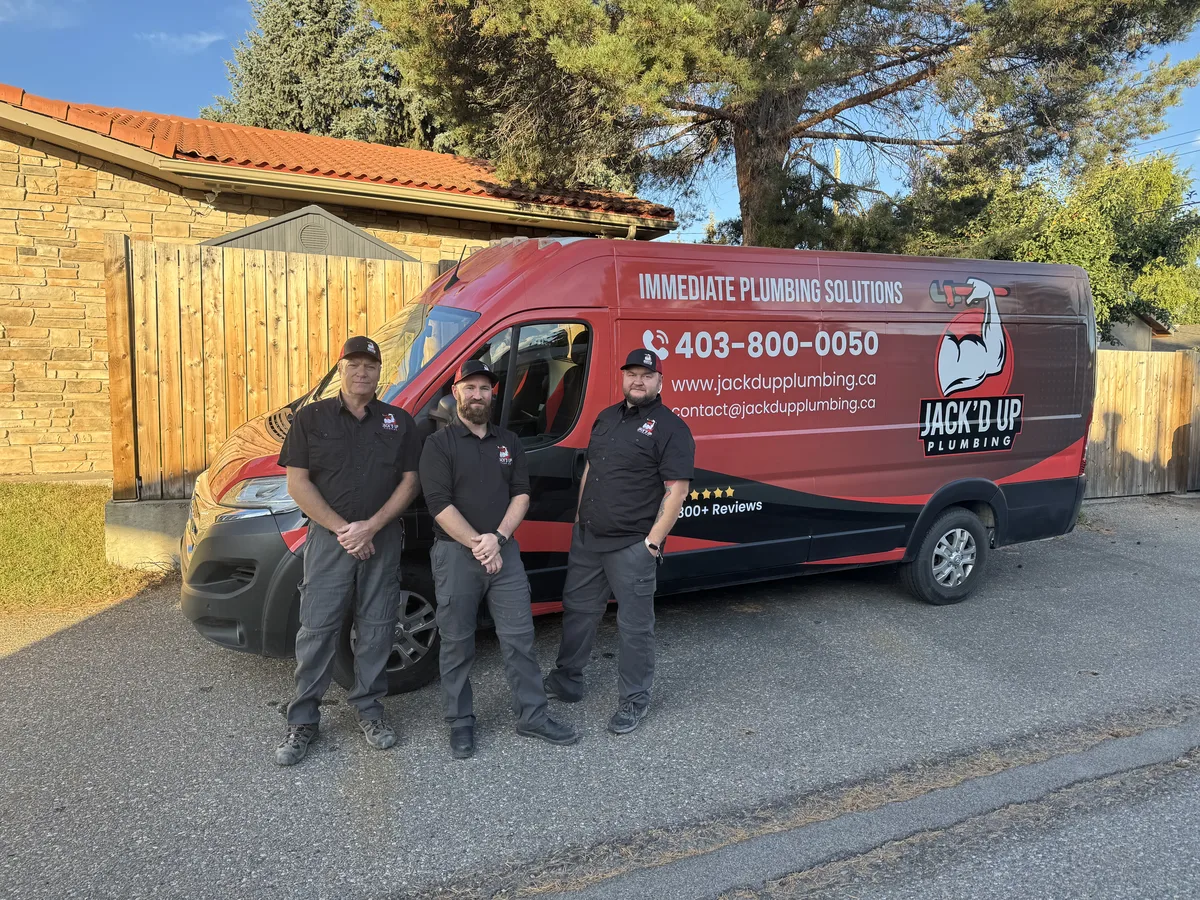
- A licensed Red Seal journeyman comes out, never an apprentice.
- The visit is $69.99, waived if you go ahead with the work.
- We don’t price a leak over the phone, because the journeyman needs to see the tank first.
- Your price is agreed before any work starts, so the invoice holds no surprises.
- The person who quotes your job is the person who does the work.
Common Questions About a Leaking Hot Water Tank in Calgary
Can I still use hot water if my tank is leaking?
No. Turn the tank off and close its cold water valve right away, and don’t keep using it. Never try a repair while it still has power and water connected.
Is a leaking hot water tank dangerous?
The everyday danger is water damage: even a small leak can damage your home, lead to mould and get worse over time. If you smell gas, leave and call 911 or ATCO’s emergency line from outside. Don’t use a tank, gas or electric, if any part of it has been under water; a gas tank stays off until a qualified service technician has inspected it. Never plug or cap the relief valve’s pipe.
Why is my hot water tank leaking from the bottom?
It’s either the drain valve or the tank itself. A drain valve left open just needs closing, and one that won’t close properly is usually replaced. Water from the tank itself is often the first sign of a corroded tank, which means a new water heater. A licensed journeyman can tell you which it is.
Why is water dripping from the relief valve pipe?
Frequent drips are a sign of pressure building up, often from water pressure that is too high or from thermal expansion in a closed water system. The fixes for those two are a pressure reducing valve or an expansion tank on the cold water line. A valve that runs constantly may itself be faulty and needs a qualified technician. Never plug or cap it.
Can a leaking hot water tank be fixed?
Often, yes, when the leak is at a fitting, a valve or a heating element gasket. Not when the tank itself leaks: the remedy for that is a new water heater.
How long does a hot water tank last?
A. O. Smith’s repair-or-replace guide puts the average life at about 8 to 12 years, based on the manufacturer’s suggested service life. An older tank that leaks around its base is probably due for replacement.
How much does it cost to fix a leaking hot water tank?
It depends on what’s leaking: a part is a repair, and a leaking tank means a new water heater. That’s why we don’t price it over the phone. A licensed journeyman visits for $69.99, waived if you go ahead, and gives you a firm price, agreed before any work starts.
Is the repair or the new tank covered by a warranty?
A new water heater we supply is covered by a 2-year labour warranty through Jack’d Up Plumbing and a 5 to 10 year parts warranty through the manufacturer. Most other installations and repairs carry a one-year workmanship warranty, and a whole-house repipe or a main shut-off replacement carries three years. Other parts carry the manufacturer’s warranty, usually one to six years depending on the brand. Maintenance, such as a tank flush, is not warranted. Ask us about the warranty on your job.
Water around your tank right now? Call Jack’d Up Plumbing at 403-800-0050, Monday to Friday, 8:00 a.m. to 5:00 p.m. A licensed journeyman looks at the tank, gives you your options, and agrees your price with you before any work starts.
About the author. Jackson MacDonald is a Red Seal journeyman and owns Jack’d Up Plumbing, incorporated in 2021. The team has over 50 years of combined experience, and its technicians are all Red Seal journeymen, never apprentices. Read more about Jackson and how we write and check our guides.
Talk to Our Team
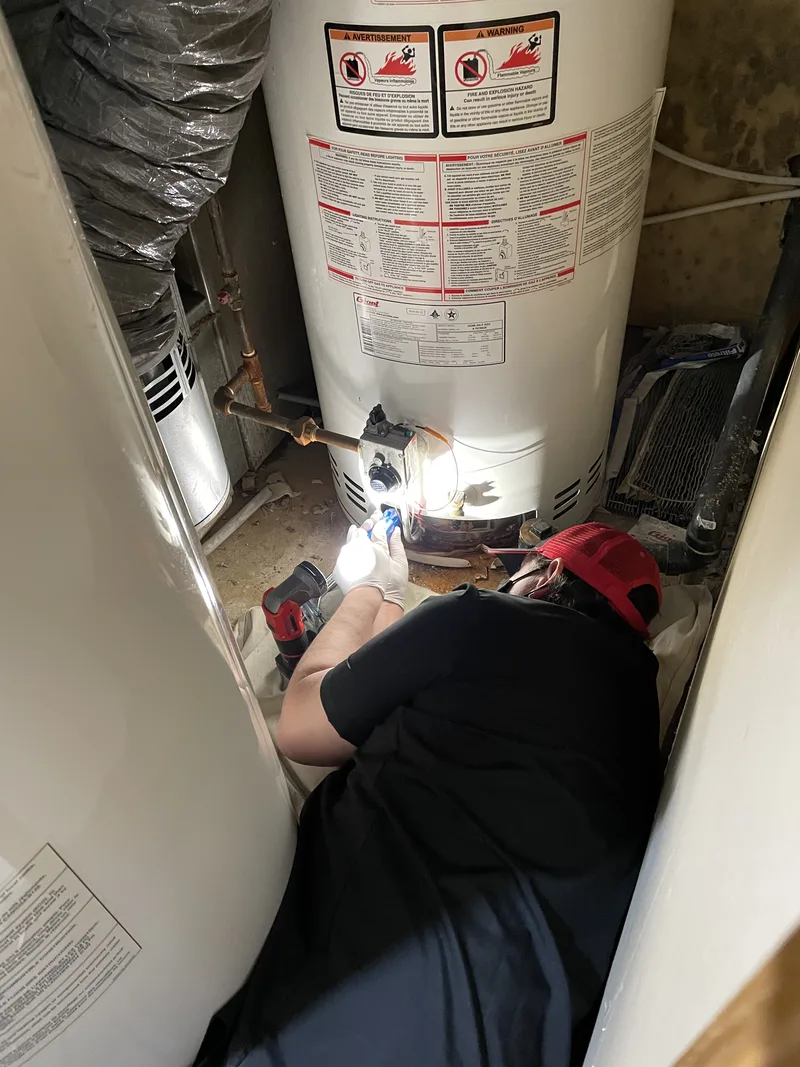 Our ServiceWater Heater Repair in Calgary