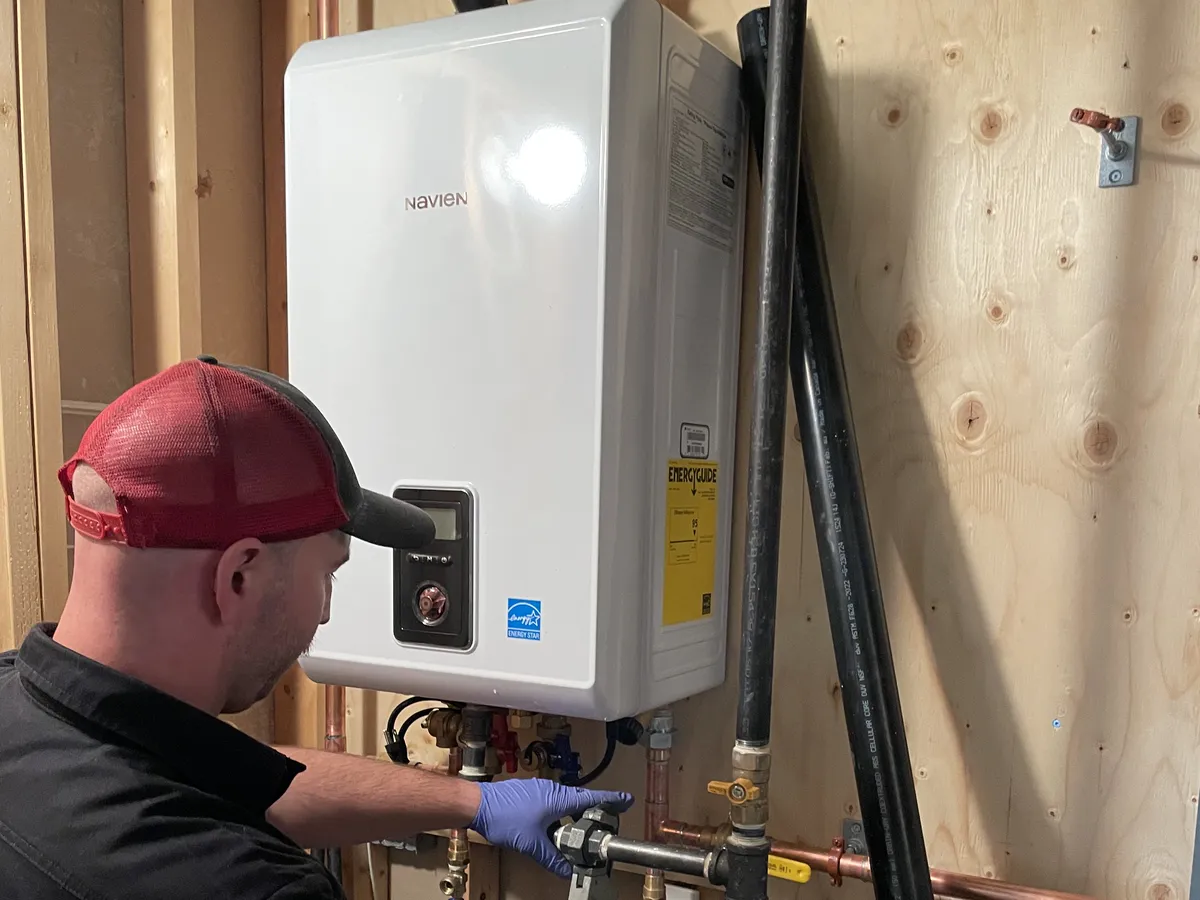
By Jackson MacDonald, owner and Red Seal journeyman
The tank vs tankless water heater choice comes down to your household’s hot water needs.
A tank water heater has a lower upfront purchase and installation cost, but it can run out of hot water and continuously uses energy to keep stored water hot.
A tankless water heater heats water on demand, providing a virtually endless supply of hot water. While the initial investment is typically higher, it can offer long-term energy savings and, with proper maintenance, can last longer than a traditional tank water heater.
How a Tank and a Tankless Water Heater Work
Whether you call it tankless vs tank water heater or hot water tank vs tankless, the two work in opposite ways.
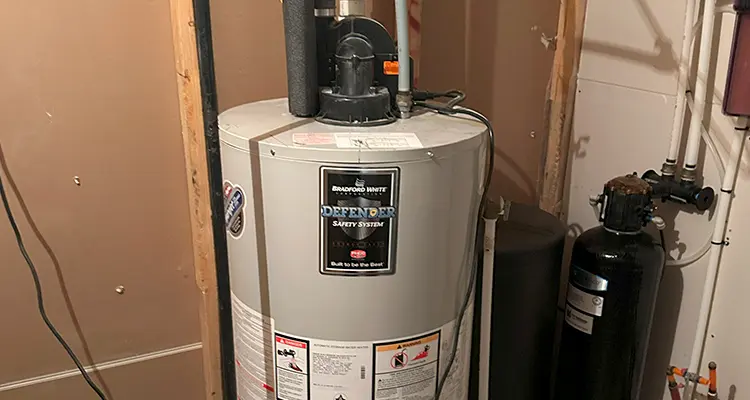
A hot water tank, also called a storage tank water heater, keeps its water at a steady temperature, so hot water is usually there when you need it. As you use hot water, cold water flows in until the tank is full again. That means it uses energy even when no one is running a tap.
A tankless water heater has no storage tank, so it saves space and usually hangs on a wall. It heats water as it flows through, and gives essentially endless hot water on demand. It is also called an on demand water heater.
Why the choice matters: Natural Resources Canada’s guide to water heaters puts water heating at 19.3% of the energy used in the average Canadian home. That makes it second only to home heating.
One thing tankless does not change: hot water still has to travel through your pipes to reach the tap, so it is not instant. A hot water recirculation pump keeps hot water moving through the pipes so it reaches the tap sooner, and we install one where a home needs it.
Tank vs Tankless Water Heater Pros and Cons
Here is how tank vs tankless water heaters compare, side by side.
| Hot water tank | Tankless water heater | |
|---|---|---|
| Upfront cost | Lower to buy and install | Higher to buy and install |
| Running cost | Uses energy keeping its water hot all day | More energy efficient |
| Hot water supply | As much as it holds, then a wait while more heats | Essentially endless, but only as much at once as it can heat |
| Several showers at once | Fine until the stored hot water is used up | Can be more than it is rated for |
| Space | Stands on the floor | Usually hangs on a wall, saving floor space |
| Lifespan | Around 10 years on average | Around 15 to 20 years |
| Upkeep | A flush at least once a year | Descaling (clearing out the mineral scale hard water leaves inside) at least once a year, more often with hard water |
| Installation | A tank-for-tank swap is typically straightforward | A switch often needs gas line, venting and permitting |
The lifespans are A. O. Smith’s figures, and the descaling interval is Navien’s; the lifespan section below covers both.
The tankless water heater pros and cons come down to this: it costs more, but it saves energy and floor space and lasts longer. Natural Resources Canada says an ENERGY STAR certified tankless water heater can save 30% more energy than a standard storage tank. The disadvantages of a tankless water heater are its higher price, a limit on how much hot water it makes at once, and the descaling it needs.
The downsides of a hot water tank are the other side of the table. It can run out of hot water, it uses energy keeping water hot when no one is using it, and it has a shorter life expectancy.
Neither one wins for every home. Which suits yours depends on how your household uses hot water, and the sections below help you settle it.
Tank vs Tankless Water Heater Cost in Calgary
Our installed prices for a hot water tank run from $2,000 to $4,500. The low end is a small point-of-use water heater, one that sits close to the fixture or area it serves. The high end is an extra-large, high-output, high-efficiency gas-fired water heater. A tankless water heater installed by Jack’d Up Plumbing starts at $4,400.
The two are not like for like. The tank range runs from a small water heater to an extra-large one, so the top of it passes the point where tankless starts.
We supply only premium, high-BTU-output tankless units. A BTU, or British thermal unit, is a measure of heat. These units cost more than lower-output ones, and we choose them because they reliably meet the higher hot water demand of a colder climate.
What moves the price is the work your home needs. Installing tankless usually costs more than installing a tank, and a switch often means upgrading the gas line, redoing the venting and permitting. When we supply the new water heater, taking away and disposing of the old one is included at no extra charge. When a job needs a permit, the permit fee is extra.
Running costs matter too. A more efficient model can cost more up front and pay that back in energy savings over time. Depending on how much hot water your household uses, that can take several years.
Every figure here is a general guideline. Your existing setup, access, the upgrades the job needs and any changes to meet current code can move it, and in some homes they rule out the lowest starting option. A licensed journeyman looks at your setup for $69.99, waived if you go ahead, and gives you a firm price before any work starts.
Which Lasts Longer, and What Keeps Each One Running
A. O. Smith’s tankless pros and cons puts a tankless water heater at around 15 to 20 years, against an average of around 10 years for a tank. In my professional opinion, tankless water heater lifespan comes down to proper installation, water quality management and maintenance.
Upkeep matters for both. The City of Calgary says its water is hard, from the calcium and magnesium in the Bow and Elbow Rivers. For a tank, we recommend a flush at least once a year.
For tankless, Navien recommends descaling at least once a year. A tankless heater needs it more often with harder water, a higher temperature setting or more hot water use. In a home with hard water, we generally recommend tankless water heater descaling every six months, and a service at least once a year.
Scale left inside a tankless heater can clog it, cut its efficiency and flow, and cause it to fail early. Our water heater maintenance service takes care of the flush and the descaling. If your tank is already leaking, here is what to do about a leaking hot water tank.
Choosing a Tankless Water Heater in Calgary
For tankless water heaters in Calgary, sizing starts with the cold. In a cold climate, the water coming into the house is colder and takes more energy to heat. A tankless heater is sized for the coldest days of the year, when the incoming water is at its coldest.
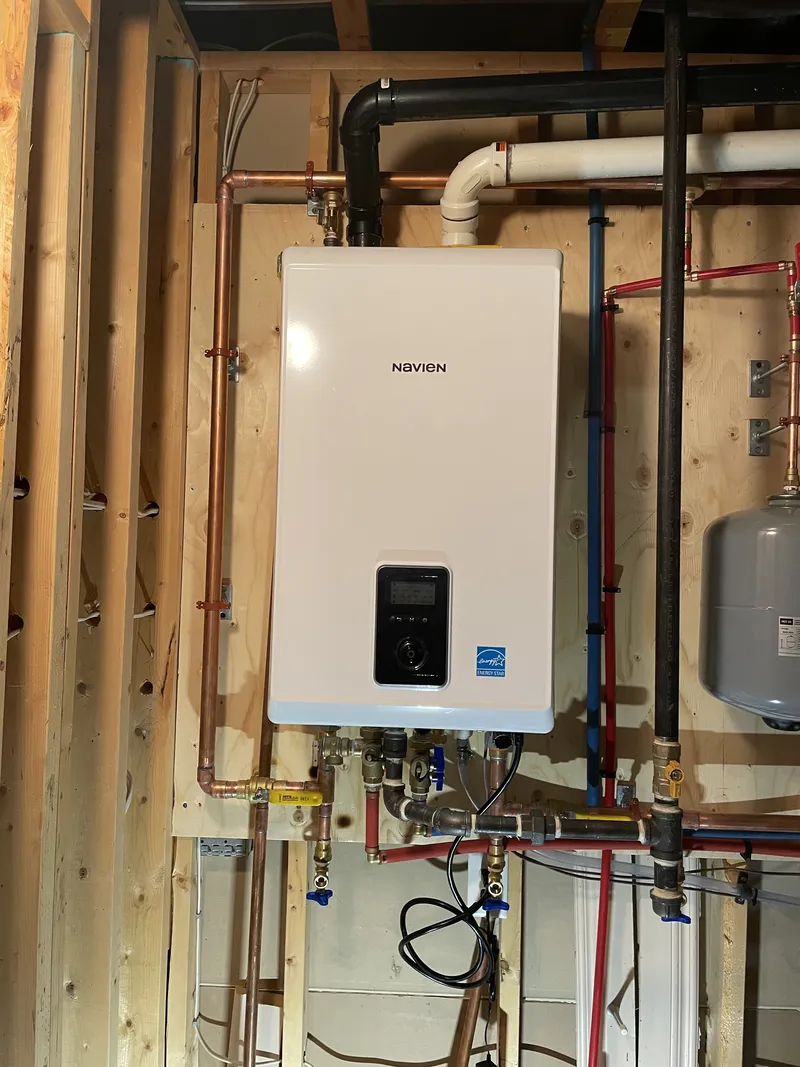
The higher a unit’s BTU rating, the more hot water it can deliver at once. One that is too small leaves your home short of hot water, and overloading it can wear it out early. There is no benefit to oversizing one either.
A tankless heater is sized by how many fixtures use hot water at the same time, such as a shower, the dishwasher and the washing machine. It is not sized by the gallons of the tank it replaces. Have a plumber estimate your home’s demand before you choose.
In Calgary, a City permit is needed in some situations. They include a change to the gas line before the water heater’s shut-off valve, to the venting, or to the type of water heater. A homeowner cannot take out the gas permit without the proper qualifications. We take care of the permit for our own work, and permit fees are extra when one is needed.
Navien is our preferred tankless brand, for its warranty coverage and manufacturer support. We repair and service all major brands of gas tankless water heaters, Navien and Rinnai included.
Electric Water Heater or Tankless? If Your Tank Is Electric
If your home has an electric tank, the electric tank vs tankless water heater question turns on your electrical service. An electric tankless heater needs its own dedicated circuit, and the home’s electrical panel may need rewiring first. Where it is often cold, it may also need to be a more powerful unit that draws more electricity.
A gas tankless heater may need a gas line run to it instead, which can add to the installation cost. We install both electric and natural gas tanks, so an electric tank can be replaced with a new electric one.
Is a Tankless Water Heater Worth It for Your Home?
Whether a tank or tankless water heater suits you comes down to how your household uses hot water.
A tank may suit you better if:
- you want the lower upfront cost
- you are replacing a tank like for like, typically a straightforward job
Tankless may suit you better if:
- you want essentially endless hot water and your floor space back
- you plan to keep it long enough for the energy savings to pay back its higher price
Either way, have a plumber estimate your home’s hot water demand before you choose. Having a professional look at your home first can save you from surprise costs later. If your tank has stopped working and you are not ready to replace it, our water heater repair visit starts by finding out why.
Getting a Firm Price From a Licensed Journeyman
Maybe your tank is getting old and you want to choose its replacement before it quits. Or you went to have a shower and didn’t have any hot water. Either way, call Jack’d Up Plumbing at 403-800-0050, Monday to Friday, 8:00 a.m. to 5:00 p.m.
- A licensed Red Seal journeyman comes out, never an apprentice.
- The visit is $69.99, waived if you go ahead with the work.
- We don’t price a water heater over the phone, because the journeyman needs to see your setup first.
- You get your options, with a firm price agreed before any work starts.
- The person who quotes your job is the person who does the work.
Our team has over 50 years of combined experience. For what the job involves, see our water heater installation service.
Common Questions About Tank and Tankless Water Heaters
Is a tankless water heater worth it?
It depends on how your home uses hot water. A tankless heater costs more up front and can take several years to pay back, but it lasts longer than a tank. It suits a home whose hot water is needed over extended periods.
Can a tankless water heater run several fixtures at once?
It depends on the size of the unit and how cold the incoming water is. Tankless water heaters are sized to handle the hot water demand of the fixtures running simultaneously, even on the coldest days of the year.
If multiple showers or fixtures are running at once, you may need a larger unit or multiple units operating together.
A licensed journeyman plumber will assess your household’s hot water needs and explain your options so you can choose the right system for your home.
Which lasts longer, a tank or a tankless water heater?
A tankless heater, by A. O. Smith’s figures: around 15 to 20 years, against around 10 for a tank. Upkeep matters for both: a yearly flush for a tank, and descaling for tankless, more often with Calgary’s hard water.
Can a tankless water heater replace my 40-gallon tank?
Yes, but not by matching gallon capacity. A tank water heater is sized by how much hot water it stores. A tankless unit is sized by the flow rate your home needs when multiple fixtures are running at once.
Switching to tankless may also require gas line upgrades, venting modifications, and permits. A licensed journeyman plumber will assess your setup and explain what’s needed before installation.
Do I need a permit to switch to tankless in Calgary?
Often. A permit is needed when the job changes the gas line before the water heater’s shut-off valve, the venting, or the type of water heater. A homeowner cannot take out the gas permit without the proper qualifications. We take care of it for our own work, and permit fees are extra when one is needed.
What is the downside of a tankless water heater?
It costs more to buy and to install. It needs descaling to keep mineral scale from building up inside. Hot water also still takes time to travel through the pipes to your tap.
Is a new water heater covered by a warranty?
A new water heater we supply is covered by a 2-year labour warranty through Jack’d Up Plumbing and a 5 to 10 year parts warranty through the manufacturer. Ask us about the warranty on your job to confirm what is included.
Deciding between a tank and tankless? Call Jack’d Up Plumbing at 403-800-0050, Monday to Friday, 8:00 a.m. to 5:00 p.m. A licensed journeyman looks at your setup, gives you your options, and agrees your price with you before any work starts.
About the author. Jackson MacDonald is a Red Seal journeyman and owns Jack’d Up Plumbing, incorporated in 2021. The team has over 50 years of combined experience, and its technicians are all Red Seal journeymen, never apprentices. Read more about Jackson and how we write and check our guides.
Talk to Our Team
 Our ServiceHot Water Tank Installation in Calgary